The cheaper rate per tonne is not enough to decide between a flat plate and a coil. You will be able to compare the full cost of usable blanks, match each material form to the job, and identify when handling, processing, storage, or rejection risk wipes out the apparent saving.
Key takeaways
- Compare delivered cost per accepted blank, not price per tonne.
- Choose plate for heavy sections, fixed blanks and geometry-sensitive work.
- Choose coil when volume supports decoiling, levelling and continuous cutting.
- Ask suppliers for thickness tolerance, flatness, coil weight and test certificates.
The real comparison is cost per accepted blank, not cost per tonne
A tonne quote is useful only after you know how many conforming blanks it produces. Compare the delivered cost per accepted blank, not the material price per tonne, before choosing plates and coils for fabrication in Mumbai.
| Option | Cost advantage | When it earns its place |
|---|---|---|
| Cut-to-size sheet | Low setup and handling cost | Small batches, thin parts, urgent or irregular sizes |
| Plate | Fewer full-coil commitments and strong geometry control | Thick blanks, heavy weldments, pressure-related parts, variable dimensions |
| Coil | Lower handling per piece and efficient repeat cutting | High-volume rectangular blanks, ducting, enclosures, roll-formed parts |
| Structural sections or pipes | Ready-made strength and geometry | Frames, rails, supports, handrails, and tubular assemblies |
| Prefabricated components | Minimal cutting and fabrication labour | Standard assemblies where purchased fit-up is acceptable |
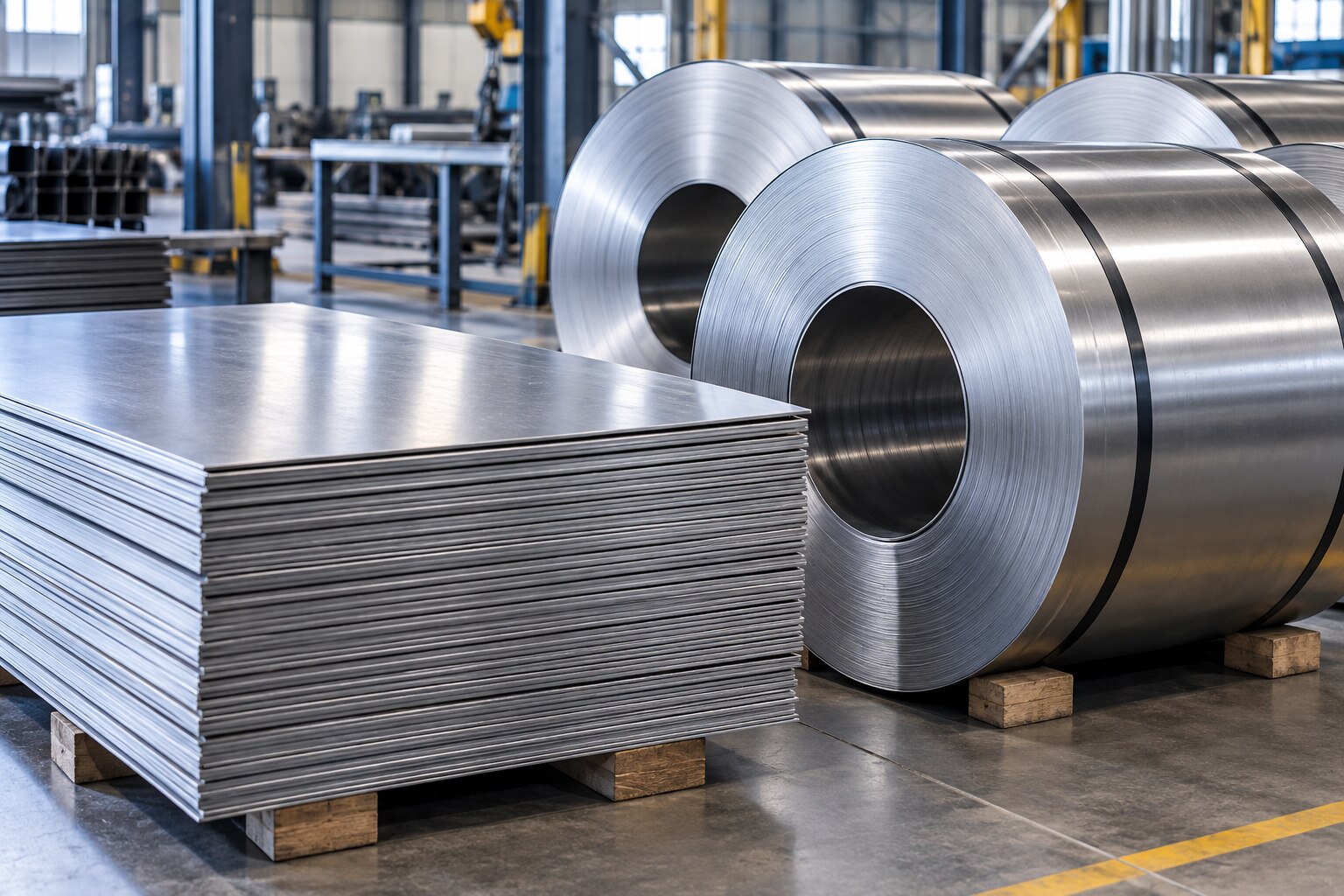
A plate route usually wins for one-off base plates, flanges, gussets, tanks, machine frames, and heavy assemblies because you avoid buying a full coil, coil lifting, separate levelling, and unusable remnants. Coil becomes worthwhile when one grade and thickness runs continuously, width is well nested, and a qualified line can guarantee flatness, dimensions, and traceability.
Include every cost that can turn a cheap coil into expensive rejects:
- Nesting yield, edge trim, head-and-tail crops, and remnants
- Levelling, slitting, cut-to-length, minimum processing, and inspection charges
- Freight by weight and dimensions, unloading equipment, floor space, and storage
- Certificate costs and rejects from flatness or surface defects
For metal plates for fabrication, specify grade, standard, thickness, width, tolerance class, surface condition, certificate, and inspection requirement before comparing quotations. A cut-to-size blank is cheaper when processing, handling, or acceptance risk outweighs bulk savings.
Where plate earns its place in heavy and geometry-sensitive work
Buy flat plate when the blank is thick, wide, irregular, or critical to weld alignment. Metal plates for fabrication earn their place when buying sheets, sections, pipes, or prefabricated parts would force extra joints, distort the geometry, or leave too little material for machining.
Plate is a strong fit for these jobs:
- Base plates, gussets, brackets, and machine frames needing rigid, accurately located faces
- Tank panels, flanges, and heavy welded assemblies cut in changing sizes
- Pressure-vessel heads, shells, or reinforcement parts where the design specifies plate grade, thickness, and testing
- Large irregular blanks that would create excessive remnants from standard sheet sizes
| Job | Why plate earns its place | Main risk to control |
|---|---|---|
| Base plate or frame | One rigid blank reduces joints and alignment work | Bow or thickness variation |
| Flange or gusset | CNC cutting and machining preserve repeatable geometry | Hole location and edge quality |
| Tank or pressure part | Welded construction uses traceable, specified material | Wrong grade, heat treatment, or test record |
Put these details on every quotation request:
- Grade and governing standard, such as IS 2062, ASTM A36, or an approved pressure-vessel specification
- Nominal thickness, permitted tolerance, plate length and width
- Delivery condition, heat-treatment state, surface finish, flatness, and ultrasonic testing requirement
- Mill test certificate type, heat number traceability, and any impact-test temperature
- Cutting allowance, machining allowance, edge condition, and acceptable surface defects
A cheap tonne rate is irrelevant if the plate arrives too warped, thin, or uncertified for acceptance.
When coil saves labour—and when it creates another process
A coil earns its keep when you repeatedly make the same strip, ducting panel, enclosure blank, roll-formed section, or high-volume laser-cut part. The calculation changes for prototypes, irregular blanks, urgent work, and small batches: a flat plate or pre-cut sheet can avoid coil lifting, a separate processor, and unusable remnants.
| Option | Best fit | Added process and risk |
|---|---|---|
| Coil | Repeat dimensions, thinner standard-width parts, substantial monthly tonnage | Uncoiling, levelling, slitting or cut-to-length; flatness, camber, surface and traceability failures |
| Plate | Thick, variable-size, pressure-related or geometry-sensitive parts | Less primary processing, but more nesting, cutting and handling |
| Pre-cut sheet | Small lots, urgent blanks and one-off fabrication | Higher piece price, lower setup and leftover-stock exposure |
Price industrial coils in Mumbai against accepted blanks, not tonnes. Include the leveler, cut-to-length line or slitter, operator time, toll-processing charges, minimum order, and coil transport and unloading equipment.
- Calculate nesting yield, edge trim, end crops and leftover width.
- Add freight by weight and dimensions, crane or forklift unloading, floor space and rack capacity.
- Include mill certificates, inspection or third-party inspection, and the cost of rejects from poor flatness, dents, rust or surface defects.
A qualified line must guarantee thickness, width, cut length, flatness, tolerances and heat-number traceability. Without that control, plates and coils for fabrication in Mumbai can look cheaper on paper while producing more rework, scrap and delayed deliveries.
A practical decision test based on thickness, volume, dimensions, and tolerances
Choose the material form by asking four questions: what thickness and grade do you need, how many parts will you make, what blank dimensions repeat, and what tolerance will the finished part accept?
| Option | Choose it when | Main risk |
|---|---|---|
| Plate | Thick material, low volume, large or changing blanks, tight geometry, pressure or structural work | Paying for cutting and carrying remnants |
| Coil | Thin, repeatable parts with high monthly volume and efficient width usage | Added levelling, slitting, cut-to-length, flatness and edge-trim costs |
| Sheet | Standard thin blanks in small or medium batches | More per-unit cost than a stable coil route |
| Pre-cut component | One-off, urgent, irregular or tightly toleranced part | Higher piece price, less control over nesting |
Start with thickness. Thick, stiff stock and parts requiring reliable flatness after welding favour plate; thin strip for ducting, enclosures or roll-formed sections favours coil. Do not treat hot-rolled coil as interchangeable with plate without checking rolling route, dimensional tolerances, surface condition and certification.
Next, calculate usable blanks rather than tonnes. Include nesting loss, end crops, slitting or levelling charges, freight, unloading, storage and rejects from flatness or surface defects. A coil needs a leveler, cut-to-length line, slitter or qualified processor; without one, the apparent saving disappears.
For plates and coils for fabrication in Mumbai, choose plate for prototypes and variable orders. Choose industrial coils in Mumbai when the same grade, thickness and width run continuously, with documented traceability and acceptance tolerances. Pre-cut parts win when those conditions do not hold.
What to ask a Mumbai supplier before committing to a plate or coil
A low steel rate is irrelevant if the delivered material cannot produce accepted parts. Give every plates and coils supplier in Mumbai the same written material schedule before comparing quotations.
- Grade and standard: state, for example, IS 2062, ASTM A516, or EN 10025, plus thickness, width, cut length or coil width, quantity, tolerance class, surface condition, and delivery form.
- Commercial terms: ask for minimum order quantity, price basis, cutting, slitting, levelling, edge-trim and end-crop charges, freight, taxes, delivery date, and payment terms.
- Certification: request an EN 10204 3.1 inspection certificate showing heat number, chemistry, mechanical results, dimensions, and traceability. Ask whether third-party inspection, ultrasonic testing, or a specific inspection agency is required.
- Handling: ask who unloads the material, what lifting equipment is available, how coils are oriented and secured, and whether slitting or cut-to-length processing is included. A coil can roll or release stored force during uncoiling.
- Storage: confirm whether you have dry floor space, rated supports, coil cradles, corrosion protection, and access for safe retrieval. Do not accept stock that arrives without readable heat markings or with damaged edges.
| Form | Ask the supplier | Reject the quote when |
|---|---|---|
| Plate | Flatness, cut tolerance, test certificate, and remnant ownership | Size or certification is vague |
| Coil | Slitting, levelling, width tolerance, yield loss, and processor traceability | Processing responsibility is unclear |
A fabrication material supplier such as Mercury Metalinks becomes easier to assess when its quotation answers these points line by line.
Related product
 | PLATES & COILS Mercury Metalinks Mercury Metalinks is a trusted supplier and stockist of premium-quality Plates & Coils, offering a comprehensive range of metal... View product → |
Frequently asked questions
How should you compare the cost of plates and coils?
Calculate delivered cost per accepted blank, including material yield, freight, handling, decoiling, levelling, cutting, setup time, labour and rejected blanks.
When is plate better than coil for fabrication?
Plate suits heavy and geometry-sensitive work, fixed blank sizes, thicker sections and jobs where avoiding decoiling or levelling simplifies production.
When does coil save fabrication labour?
Coil saves labour when you have sufficient volume for continuous decoiling, levelling and cutting, with repeatable dimensions and tolerances.
What should you ask a Mumbai supplier before buying plate or coil?
Ask for thickness and width tolerances, flatness, coil or plate dimensions, minimum order quantity, coil weight, surface condition, mill test certificates and delivery details.