A quotation for “6 mm MS sheet” leaves too many decisions unstated: grade, tolerance, surface, traceability, cutting yield, and delivery conditions can all change the result. By the end, you will have a purchase-order checklist, a supplier comparison method, and an inspection process suited to Chennai transport, storage, and fabrication work.
Key takeaways
- State grade, standard, thickness, dimensions, quantity and delivery condition.
- Specify the tolerance standard instead of accepting an undefined sheet size.
- Request the mill test certificate, invoice, packing list and heat number.
- Compare freight, inspection evidence, lead time and replacement terms—not rate alone.
What must you state in the enquiry before asking for a sheet price?
State the complete sheet specifications for procurement before requesting a price: product form, material grade and quality, product standard and edition, nominal thickness, width, length, quantity, delivery condition, and dimensional-tolerance standard. “6 mm MS sheet” is incomplete.
Request IS 2062 with the exact grade and quality, such as E250 or E350, or ASTM A36 or ASTM A572 where the design permits; include the required impact-test temperature.
For stainless steel, name ASTM A240 Type 304 or 316L, surface finish, thickness tolerance, and any pickling or passivation requirement. Match the grade to the drawing, welding procedure, pressure or structural calculation, temperature, and service fluid.
- For welded metal sheets for fabrication, obtain heat chemistry before approving the welding procedure.
- Calculate carbon equivalent as C + Mn/6 + (Cr + Mo + V)/5 + (Ni + Cu)/15, with each element in weight percent.
- State forming condition and rolling direction for bending, deep drawing, or tight-radius forming.
| Option | Specify | Choose when |
|---|---|---|
| Carbon or mild steel | IS 2062 E250/E350, or ASTM A36/A572 | Cost and weldability control the job |
| Stainless steel | ASTM A240 Type 304 or 316L, finish and treatment | Corrosion resistance is defined |
| Duplex or super duplex | Exact grade and corrosion design basis | Strength and severe corrosion govern |
| Brass | Alloy grade and temper | Conductivity, machinability, or corrosion behaviour fits |
Never replace a specified grade informally. Obtain written engineering approval after checking chemistry, strength, weldability, corrosion resistance, and code acceptance.
How do form, dimensions, tolerances, and quantity affect the real order?
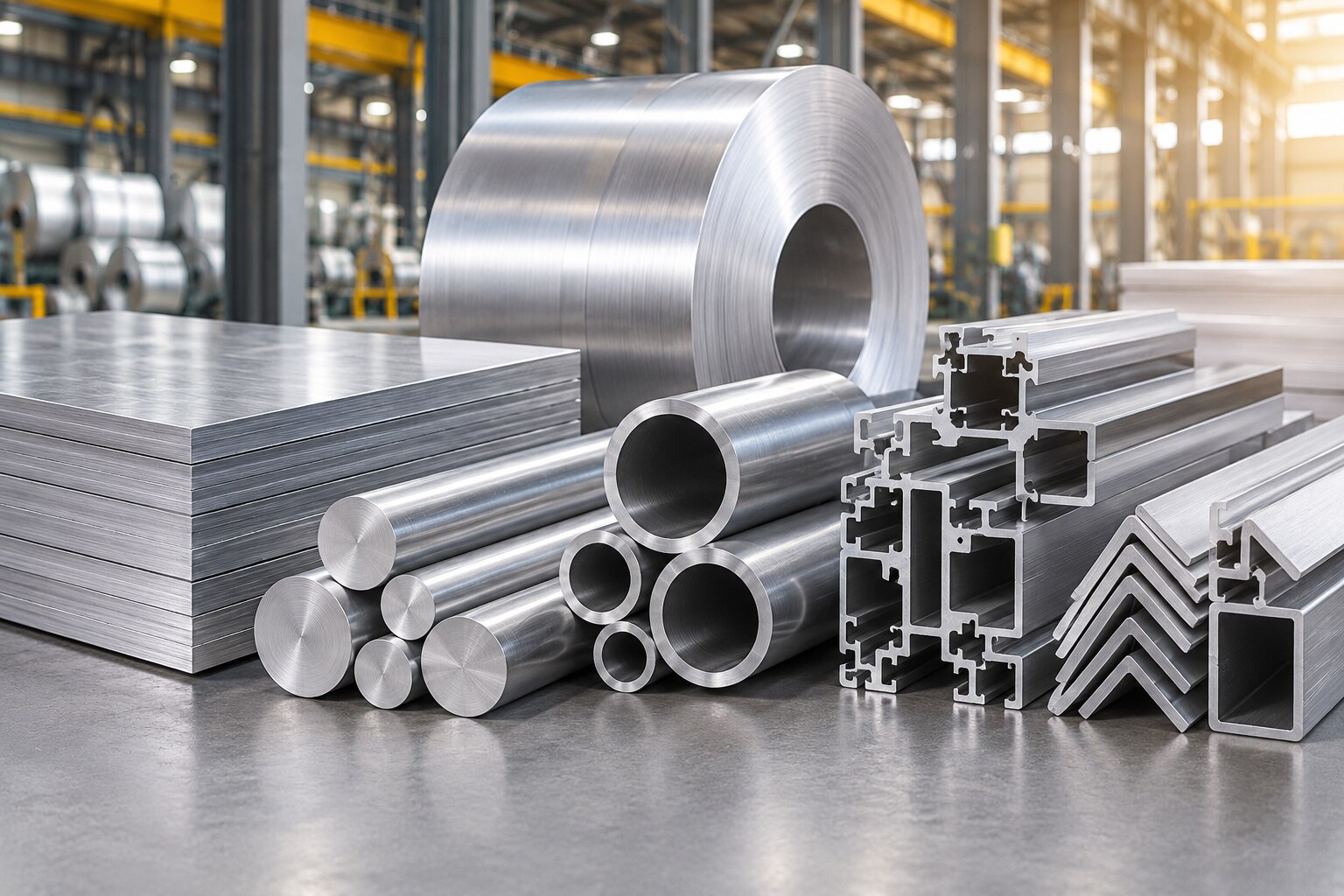
A 6 mm quotation is incomplete unless it identifies the product form and standard boundary. Choose flat sheets for individual handling and fit-up, strip for narrow repeated parts, or coil for continuous processing; confirm whether the governing standard classifies the product as sheet or plate.
| Form | Best fit | Main constraint |
|---|---|---|
| Flat sheet | Laser-cut parts, enclosures, weld fit-up | Individual lifting and storage |
| Strip | Narrow, repeated components | Slitting width and edge condition |
| Coil | Continuous stamping or profiling | Decoiling, straightening, and safe handling equipment |
| Plate | Heavy-duty structural or pressure work | Weight, lifting limits, and applicable plate tolerances |
For industrial steel sheets in Chennai, state nominal thickness, width, length, squareness, camber, flatness, waviness, edge condition, and the dimensional standard, such as IS 1852, ASTM A6, or ASTM A480 as applicable. Mark each value as nominal, maximum, actual, or guaranteed minimum.
A sheet that meets thickness and chemistry can still need levelling before laser nesting, press-brake bending, weld fit-up, or enclosure assembly.
- Are dimensions actual, nominal, or guaranteed minimum?
- Is flatness measured, and against what permitted waviness?
- Is billing by actual, theoretical, or piece weight?
- Are cutting, edge trim, and tolerance allowances included?
Calculate theoretical carbon-steel weight at about 7.85 kg per square metre per millimetre of thickness, then compare it with the invoice basis. Build quantity from the nesting plan and cut list, adding kerf, unusable areas, setup waste, dimensional tolerance, and replacement pieces. Compare full-sheet yield with cut-to-size yield before ordering metal sheets for fabrication.
Do not choose a coil without decoiling and straightening, or sheets when rolled sections, pipes, profiles, or oversized plates are required.
What documents and physical checks prove that the delivered sheets are acceptable?
1. Request a mill test certificate (MTC) naming the product, standard and edition, grade, heat or cast number, dimensions, delivery condition, chemical composition, mechanical results, and inspection status. If the purchase order requires EN 10204 Type 3.1, reject a generic test certificate or supplier declaration as a substitute.
2. Preserve heat-number traceability after cutting. Require the number to remain marked on every piece, or transfer it through a controlled, documented method linked to the original certificate. Before acceptance, reconcile the purchase order, delivery challan, sheet markings, identification tag, and certificate. Quarantine the lot if the heat number, grade, dimensions, or quantity conflict.
3. Inspect each bundle for rust, chloride staining, pitting, laminations, rolled-in scale, edge cracks, dents, edge damage, waviness, mixed grades, and missing or broken tags. Write surface acceptance into the sheet specifications for procurement: mill scale, pickled-and-oiled, blasted, bare, or bright-annealed. “Good surface” proves nothing.
4. For critical structural, pressure, or fatigue-loaded work, specify supplementary inspection before ordering. Require ultrasonic testing for laminations, Charpy impact testing at a named temperature, positive material identification, hardness testing, or independent inspection when the design demands it; a standard MTC does not automatically include these tests.
An industrial sheet supplier in Chennai should provide traceable documents and matching physical material. Visual appearance cannot prove grade.
How should you compare Chennai suppliers beyond the quoted rate?
Compare the complete delivered specification, not just the price per kilogram. An industrial sheet supplier in Chennai should distinguish available stock from material ordered from a mill.
| Option | What it means | What to confirm |
|---|---|---|
| Ex-stock | Material is physically available | Heat numbers, remaining dimensions, certificate status, dispatch date |
| Mill-indent | Material is ordered for your requirement | Mill lead time, minimum order, approved grade, certificate and replacement terms |
| Full sheet | You receive standard-size sheets | Handling, yield, packing and cutting capability at your site |
| Cut-to-size | Supplier cuts to your schedule | Dimensional accuracy, cutting charge and heat-number transfer |
Ask for the exact balance quantity, tolerance, minimum order, replacement conditions and whether the grade is original mill material or an approved substitute. Check whether the quote includes cutting, testing, packing, freight, GST and unloading.
- Full-sheet or cut-to-size supply, protective packing, moisture barriers, transport exposure and delivery lead time to your Chennai site.
- Crane or forklift availability, permitted vehicle size, unloading capacity and the storage location.
- Dispatch date and the method that keeps the original heat number linked to every cut piece and its mill certificate.
A sheet metal supplier in Chennai must explain how identification survives cutting and dispatch. Test Mercury Metalinks against the same questions, and record offers for original material, substitutes, testing, traceability and written replacement terms.
During monsoon transport, require intact wrapping and dry covered storage. Keep sheets off the floor, drain trapped water, and separate them from salt-bearing air and chemicals; inspect for pitting, chloride staining and edge damage on arrival.
Related products
 | SHEETS SHEETS Structural Sheets – Mercury Metalinks Mercury Metalinks is a trusted supplier and stockist of premium-quality Structural Sheets, offering a wide... |
 | PLATES & COILS Mercury Metalinks Mercury Metalinks is a trusted supplier and stockist of premium-quality Plates & Coils, offering a comprehensive range of metal... View product → |
When should you reject the order, change the material, or revise the enquiry?
Reject an informal substitute before it reaches fabrication. Approval requires written confirmation of chemistry, yield and tensile strength, elongation, impact performance, thickness range, weldability, corrosion resistance, code acceptance, and certification status.
1. Reject a generic grade, mixed heat numbers, unexplained tolerance, unmarked offcut, or visual similarity as proof of compliance. A quotation for “6 mm MS sheet” is incomplete.
Record the sheet specifications for procurement, including grade and quality, standard and edition, product form, thickness, width, length, tolerance, flatness, edge and surface condition, quantity, cut-size schedule, heat traceability, test certificates, inspection requirements, packing, delivery location, unloading limits, freight and tax basis, and required date.
2. Change the material or form when the design needs rolled sections, pipes, pre-cut profiles, a corrosion-resistant alloy, plates beyond safe site-handling limits, or certified pressure-vessel material rather than general structural stock. Do not force metal sheets for fabrication into a job suited to another product.
3. Require written approval for every deviation from the enquiry or drawing. At receipt, stop fabrication if the purchase order, challan, markings, and certificate disagree; obtain a corrected document, replacement material, or engineering disposition.
4. State whether billing uses actual or theoretical weight, and reserve replacement pieces in the cut plan. One damaged or nonconforming sheet must not halt production.
Frequently asked questions
What must you state before requesting an industrial sheet price?
State the product form, material grade and quality, product standard and edition, nominal thickness, width, length, quantity, delivery condition and dimensional-tolerance standard. A request for “6 mm MS sheet” does not identify enough information for a comparable quotation.
How do dimensions, tolerances and quantity affect the real order?
Thickness, width and length determine usable area, nesting and cutting loss. Tighter tolerances can restrict stock availability and increase inspection requirements. Quantity affects whether the supplier quotes individual sheets, bundles, or a mill-order quantity, as well as freight and lead time.
Which documents and physical checks confirm that delivered sheets are acceptable?
Match the heat or batch number on the sheets and bundle tag with the mill test certificate. Check the certificate for grade, chemical composition, mechanical results, heat-treatment condition and applicable standard. Inspect thickness at several points, measure width and length, check flatness, and record rust, laminations, cracks, dents and edge damage.
How should you compare Chennai industrial sheet suppliers beyond the quoted rate?
Compare the exact specification, certificate availability, stock location, dispatch lead time, freight basis, packing, inspection support, cutting capability, tax treatment and written replacement terms. Ask each supplier to quote the same grade, standard, dimensions, tolerance and delivery condition.
When should you reject an industrial sheet order or revise the enquiry?
Reject or quarantine sheets when the grade, dimensions, tolerance, surface condition or identification does not match the purchase order, or when the certificate cannot be tied to the supplied heat. Change the material only after checking welding, forming, corrosion, temperature and design requirements. Revise the enquiry when the original request used vague terms such as “MS sheet” or omitted the standard and delivery condition.
Related product
 | BUTT-WELD FITTINGS Mercury Metalinks Mercury Metalinks is a trusted supplier and stockist of premium-quality Butt-Weld Fittings, offering a comprehensive range of... View product → |