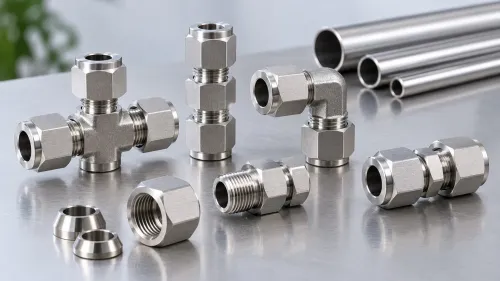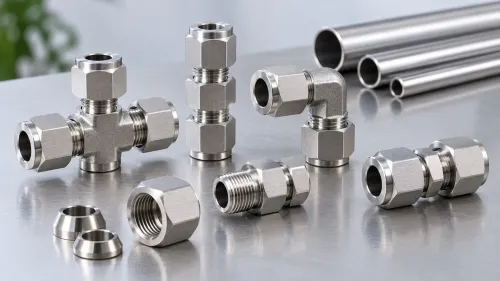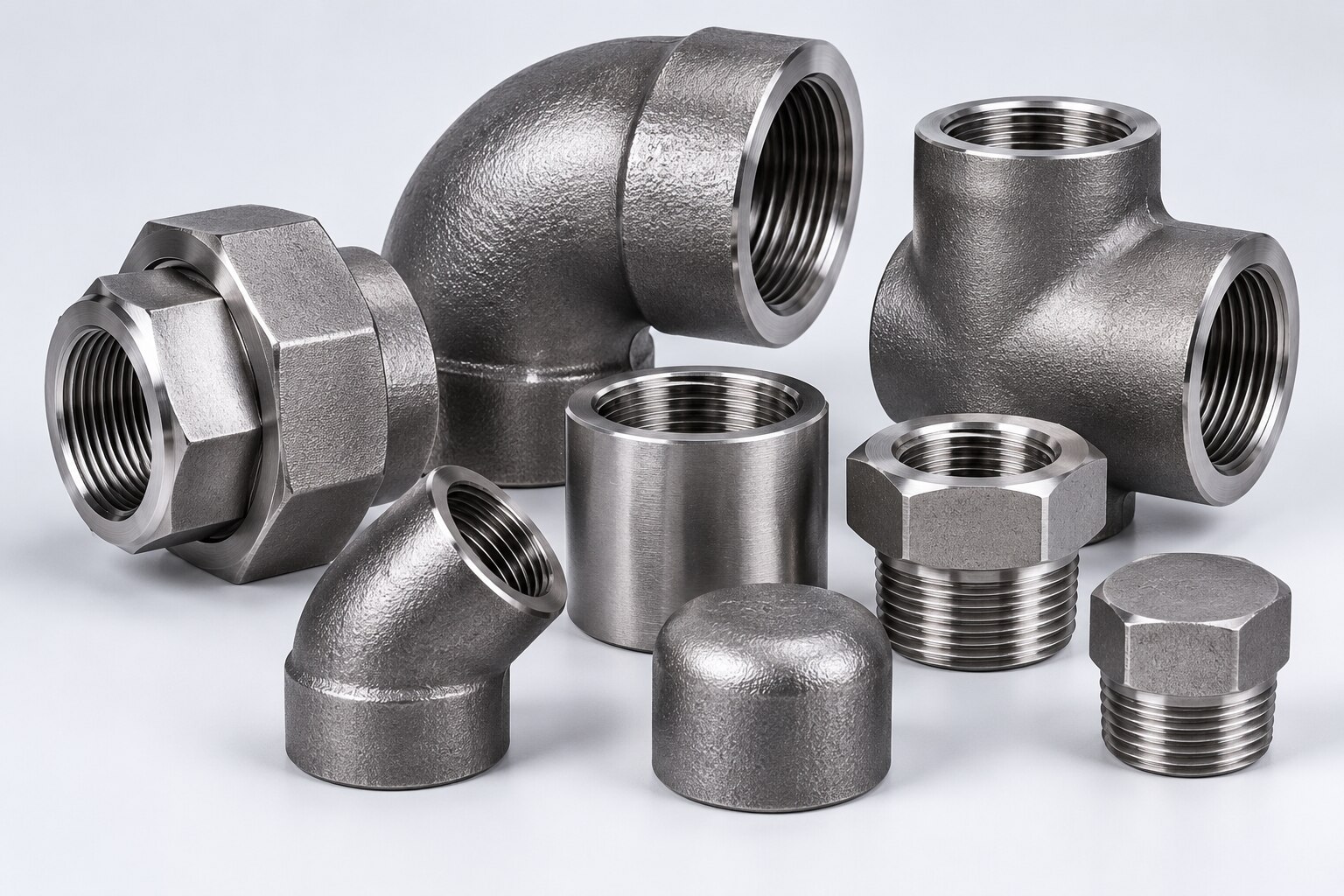
A flange quotation often covers only the flange bodies, while gaskets, bolting, certificates, inspection, and face protection appear as separate line items. By the end, you will know how to define a complete order, check flange dimensions and standards, and compare supplier quotations without leaving joint components or documents unspecified.
Key takeaways
- Confirm whether the quotation includes gaskets, bolts, nuts, washers, and inspection documents.
- State flange type, facing, material grade, pressure class, size, schedule, and applicable standard.
- Match bore, outside diameter, bolt circle, hole count, and hole diameter before ordering.
- Request heat numbers, dimensional reports, material certificates, and protected export-grade packing.
Which items are included in a standard flange quotation?
A flange body is the metal component only; a complete joint package is a ready-to-assemble connection containing the flange, gasket, and specified bolting. For anyone asking what is included with flanges in Chennai, never assume the accessories or inspection records are included.
A standard quotation should identify:
- Flange type, governing standard, nominal size, pressure class or PN rating, facing, material grade, bore or matching pipe schedule, quantity, and end connection.
- Gaskets as included, excluded, or separately quoted. Specify material, thickness, inside and outside dimensions, pressure-temperature service, and compatibility with RF, FF, RTJ, tongue-and-groove, or male-and-female facings.
- Studs or bolts as included, excluded, or separately quoted. State type, diameter, length, material, nut grade, washer requirement, coating, and quantity.
| Item | Normal quotation position | Purchase-order instruction |
|---|---|---|
| Flange body | Included | Confirm type, size, rating, facing, material, bore, quantity, and end connection |
| Gasket, studs or bolts, nuts, washers | Excluded unless listed | Define a complete bolting-and-gasket package for ready assembly |
| Spectacle blinds and insulation kits | Separately quoted | State each item and quantity |
| Face covers or temporary caps | Separately quoted | Require them for Chennai transport, monsoon or outdoor storage, and sea-air exposure |
| Certificates and reports | Separate deliverables | List material test certificates, dimensional reports, PMI, hardness, NDE, impact, and hydrotest records |
Protect machined faces with corrosion-protective packing where storage or transport could damage them. State every inclusion explicitly; otherwise, the flange price covers metal, not a complete joint.
What must appear in the flange order specification?
“4-inch stainless-steel flange” is not a complete purchasing description. It leaves the supplier to choose the standard, rating, face, grade, and bore.
Copy this flange procurement checklist into your enquiry or purchase order:
1. State the nominal pipe size, governing standard, pressure class or PN rating, flange type, facing, material grade, bore diameter or matching pipe schedule, quantity, and end connection.
2. Record the connection as weld-neck, slip-on, blind, socket-weld, threaded, or lap-joint. For weld-neck and slip-on flanges, provide the connected pipe outside diameter and wall thickness so the bore and fit-up match the pipe.
3. Use a complete designation: NPS 4, ASME B16.5, Class 300, weld neck, RF, ASTM A182 F316, bore for Schedule 40 pipe, quantity 12.
4. If dimensional approval is required, add outside diameter, flange thickness, bolt-circle diameter, bolt-hole count, and bolt-hole diameter. Request a manufacturer drawing listing the bore, facing dimensions, and flange height before production.
5. Specify documentation: heat-number marking, EN 10204 3.1 certificate, EN 10204 3.2 witnessing, inspection hold points, and the manufacturer drawing. Mark each requirement as included, separately quoted, or not required.
These flange order specifications prevent a correct nominal size from arriving with the wrong drilling, bore, or traceability. Use one governing dimensional standard; do not leave the supplier to select an equivalent.
How do standards and dimensions confirm that the flange fits?
Nominal size and pressure label alone do not prove compatibility. A “4-inch Class 300” flange can have different drilling, face geometry, and bore dimensions under different standards, so your flange order specifications must name one governing dimensional standard.
| Standard | Coverage or choice | Critical point |
|---|---|---|
| ASME B16.5 | NPS 1/2 through NPS 24 | Use its stated class, drilling, facing, and dimensions |
| ASME B16.47 | NPS 26 through NPS 60 | State Series A or Series B; outside diameter, bolt circle, hole count, and bolt size can differ |
| EN 1092-1 or JIS B 2220 | Separate dimensional systems | Do not mix either with ASME dimensions because similar nominal sizes and pressure labels do not ensure matching geometry |
Require the quotation to identify the standard, then compare the mating components for:
- Outside diameter, flange thickness, bolt-circle diameter, number and diameter of bolt holes
- Bore diameter, facing dimensions, and overall height
- Pipe outside diameter and wall thickness or schedule, especially for a weld-neck flange
A wrong weld-neck bore can create an internal step, prevent proper weld fit-up, or make the flange unusable despite the correct nominal size. Checking outside diameter alone will miss a wrong bolt pattern or bore. Request an approval drawing or dimensional inspection report listing every critical measurement before production.
That document provides the practical confirmation that the flange dimensions and standards match the component already installed.
How do flange type, facing, material, and rating change the order?
A flange order changes with four separate choices: type, facing, material, and rating. Type describes connection or function; facing describes the mating surface. For what is included with flanges in Chennai, record each choice on its own line.
1. Select the type: weld-neck, slip-on, blind, socket-weld, threaded, or lap-joint. Then select the facing: raised face (RF), flat face (FF), ring-type joint (RTJ), tongue-and-groove, or male-and-female. An RTJ order needs the specified ring-groove configuration and matching metallic ring; RF and FF joints require different gasket forms.
2. State the exact grade, not merely “carbon steel” or “stainless steel.” ASTM A105/A105M identifies a specified forged carbon-steel requirement. ASTM A182/A182M F304 or F316 identifies the required stainless grade. Include any low-temperature impact requirement, corrosion allowance, and the fluid when the project specification calls for them.
3. Specify the governing dimensional standard, nominal pipe size, bore or schedule, quantity, and rating. Choose Class 150, 300, 600, or PN16 from the pressure-temperature table for the stated material and standard; Class 150, Class 300, and PN16 are not interchangeable labels. Include design pressure and design temperature.
Check flange dimensions and standards against the connected pipe, especially weld-neck bore and hub geometry. The supplier must confirm the rating against material and temperature, not simply print the class on the flange.
How should a Chennai supplier document, inspect, and pack the order?
Make the quotation a receiving document, not a single price: require a line-by-line schedule with each item marked included, excluded, or separately quoted.
| Item | Quotation line | Receiving evidence |
|---|---|---|
| Flange bodies | Type, standard, size, rating, facing, material, bore, quantity | Heat number marked on each flange |
| Gaskets | Material, thickness, dimensions, quantity | Packing count and specification |
| Bolting and washers | Studs or bolts, nuts, washers, material, coating, quantity | Count and grade verification |
| Insulation kits | Kit type and quantity | Component checklist |
| Face protectors | Covers or caps for machined faces | Covers fitted before dispatch |
| Certificates | EN 10204 3.1, or 3.2 if witnessing applies | Certificate linked to heat numbers |
| Inspection reports | Tests required by the purchase order | Results, acceptance standard, sampling level |
| Packing | Corrosion protection and transport method | Packing list and photographs |
Include PMI, hardness testing, ultrasonic examination, magnetic-particle or liquid-penetrant testing, impact testing, and hydrotest records only when specified. State the acceptance standard, sampling level, and witness or hold point for every test; otherwise a missing report becomes an argument at receipt.
Request a dimensional report covering bore, outside diameter, thickness, bolt-circle diameter, hole count and diameter, facing dimensions, and flange height. A certificate proves material traceability, not dimensional conformity.
Define face protection, sealed wrapping, desiccant or corrosion inhibitor, and crating for Chennai delivery, monsoon storage, sea-air exposure, or extended outdoor storage. Mercury Metalinks can be evaluated fairly by comparing its quotation against the same flange procurement checklist, accessories, certificates, inspection scope, and packing requirements—not a nominal-size flange price alone.
Related product
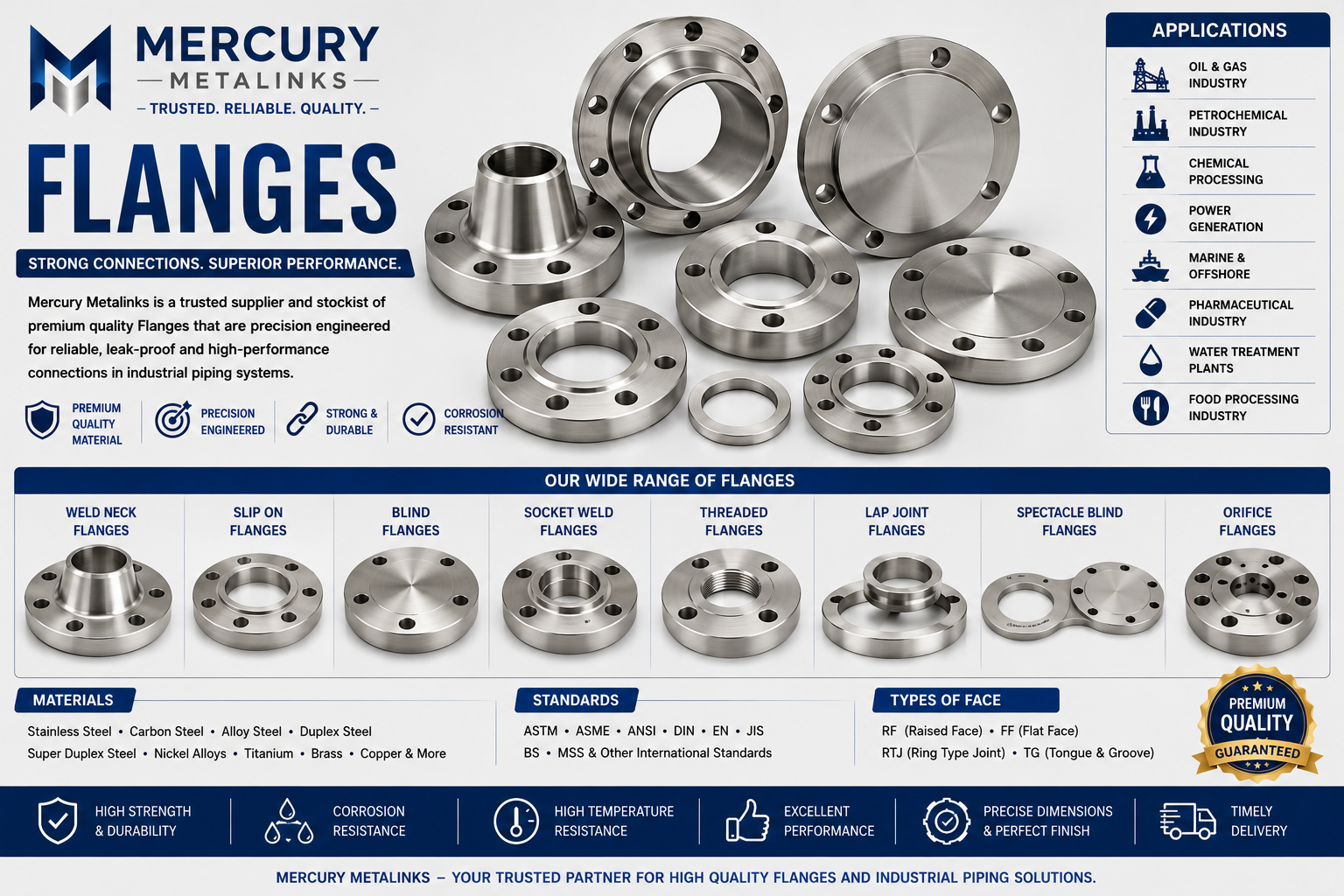 | FLANGES FLANGES Products – Mercury Metalinks Mercury Metalinks is a trusted supplier and stockist of premium-quality Flanges, offering a comprehensive range of... |
Frequently asked questions
Which items are included with a standard flange quotation?
A quotation may cover the flange body alone or a complete joint package. Confirm whether it includes the gasket, studs or bolts, nuts, washers, and inspection records.
What must appear in a flange order specification?
Specify nominal pipe size, schedule or wall thickness, flange type, facing, material grade, pressure class, quantity, applicable standard, delivery requirements, and required documents.
How do flange dimensions and standards confirm that the flange fits?
Compare the standard, nominal size, pressure class, bore, outside diameter, thickness, bolt-circle diameter, hole count, hole diameter, and facing dimensions with the mating flange and pipe.
How do flange type, facing, material, and rating change the order?
Weld-neck, slip-on, blind, threaded, socket-weld, and lap-joint flanges serve different connections. Facing, material grade, and pressure-temperature rating determine compatibility and usable service conditions.
How should a Chennai supplier document, inspect, and pack a flange order?
Request heat numbers, material test certificates, dimensional inspection reports, certificates of conformity, and any specified test records. Require identification, corrosion protection, separators, and strong moisture-resistant packing.