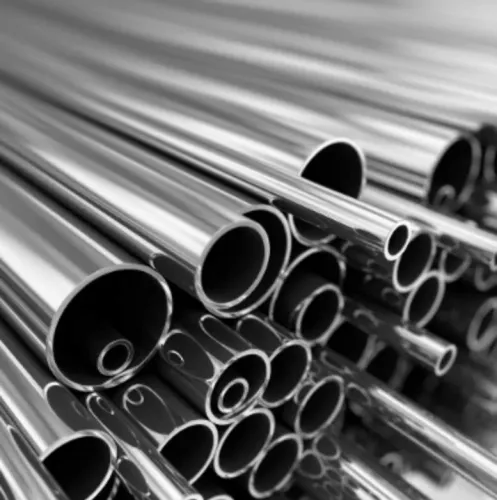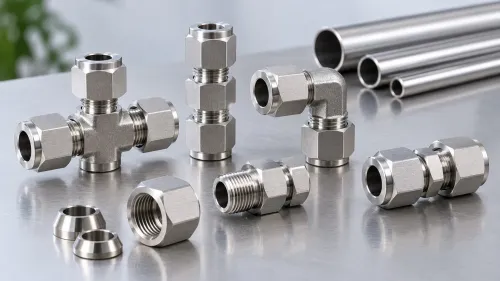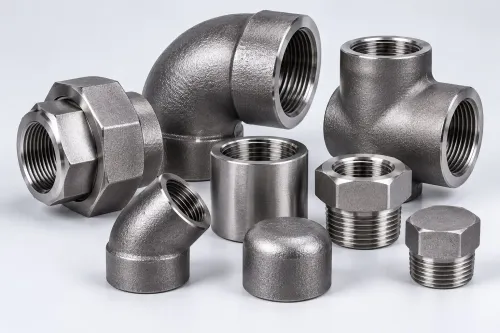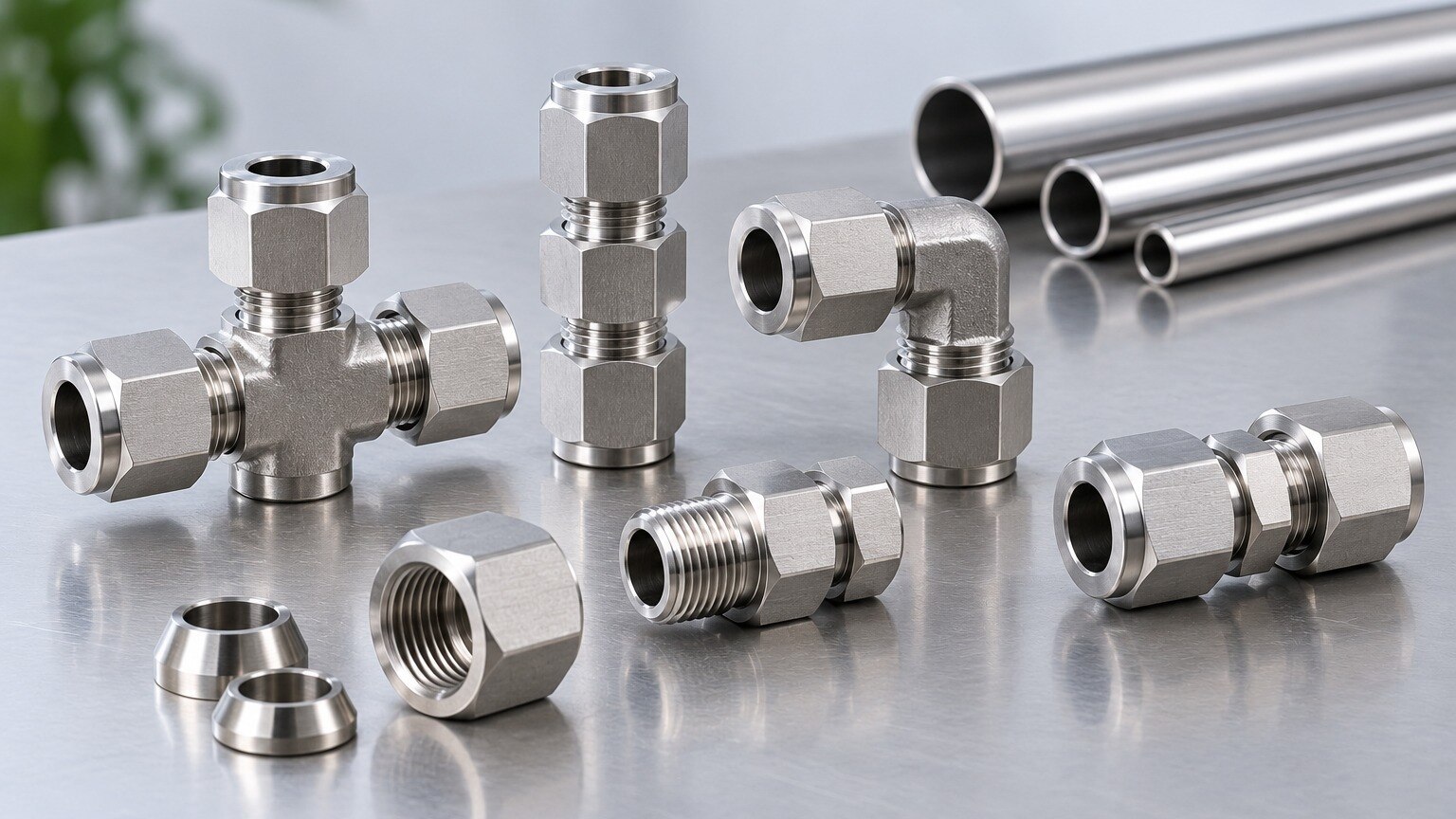
Choosing an instrumentation tube fitting involves more than matching a nominal size: tube dimensions, ferrule design, material, installation method and service conditions all determine whether the connection remains reliable. By the end, you will be able to compare fitting types, verify compatibility, plan installation controls and qualify a Chennai supplier without mixing incompatible components.
Key takeaways
- Match ferrule fittings to tube outside diameter, thread form and alloy.
- Use tubing with a clean, square cut and no surface scratches.
- Follow the manufacturer’s tightening turns; do not guess by feel.
- Record fitting size, material, supplier and installation status in spare controls.
How ferrule fittings create a restrained instrumentation connection
A ferrule fitting restrains instrumentation tubing through four parts: the tube, fitting body, nut and ferrule. The tube bottoms in the body; tightening the nut drives the ferrule against both tube and body, deforming it to create a mechanical grip and seal without PTFE tape or liquid sealant in the tube connection.
1. In a single-ferrule design, one ferrule both bites into the tube and seals against the body. A double-ferrule design separates those duties: the front ferrule forms the primary seal, while the back ferrule grips the tube and adds resistance to pull-out and vibration.
2. Tighten only after cutting the tube square, deburring it without reducing its outside diameter, cleaning it, and inserting it fully against the shoulder. Use the manufacturer’s specified turns or torque; a tube that is not bottomed can appear tight and leak when vibration or pressure acts on it.
3. Plan supports and routing around the fitting. Short unsupported runs, misalignment and thermal cycling impose bending loads that the ferrule cannot remove, even when the initial seal is sound.
These ferrule fittings for instrumentation suit impulse lines, instrument air, hydraulic tubing, gas sampling lines and process-analyser connections. They provide compact access for planned disconnection, but inspect bite marks, scoring, corrosion and ovality after removal; replace damaged ferrules or tubing instead of repeatedly tightening a leak.
These practical ferrule fitting benefits in Chennai depend on matched components and protected routing.
Where ferrule fittings beat welding, threads and compression alternatives
Choose ferrule fittings for compact instrument tubing that needs mechanical restraint, no brazing or welding, and planned disconnection. Correct tube preparation, matched components, skilled make-up and inspection are essential; poor execution turns a fast installation into rework. Ferrule fitting performance depends on the complete supported run, not the fitting alone.
| Option | Technician time and tooling | Main advantage | Main cost or risk |
|---|---|---|---|
| Ferrule fitting | Low-to-moderate; tube cutter, deburring tools and specified make-up method | Compact, restrained, disconnectable; spare nuts and ferrules are replaceable | Incorrect tube preparation, mixed components or over-tightening causes leaks |
| Generic compression fitting | Low; basic hand tools | Simple purchase and installation | Grip, sealing and vibration performance vary by design and manufacturer |
| Threaded fitting | Moderate; threading or sealant control | Robust pipe connection | Threads create leakage paths, suffer damage and require controlled sealant |
| Socket-weld fitting | High; welding access and inspection | Permanent pipework connection | Welding procedure, heat effects and inspection add time and rework |
| Orbital-welded tube | Highest; orbital equipment, qualification and records | Clean permanent joint for hygienic or high-integrity service | Equipment, procedure qualification and repair costs are higher |
- Hygienic dairy lines requiring cleanable welded joints
- Severe cyclic service where fatigue demands a qualified welded design
- Inaccessible or buried lines, or systems where disassembly is not wanted
- Temperatures beyond the fitting rating
Compare technician hours, tooling, spare-part continuity and likely rework—not just purchase price. A cheaper fitting can produce the highest installed cost.
How to verify tube, thread and material compatibility in Chennai
Start with the tube, not the fitting: confirm its exact outside diameter, wall thickness, inch or metric system, hardness and end condition before ordering ferrule fittings for instrumentation. A 1/2-inch tube and a 12-mm tube are not interchangeable.
- Confirm tube outside diameter and wall thickness from the drawing or mill certificate.
- Record tube hardness, straightness, ovality, scratches and cut-end condition.
- Specify thread form: NPT, BSPT or BSPP, plus the port standard and size.
- Request the material grade, pressure-temperature table, and minimum and maximum operating temperatures.
- Match the body, nut and ferrules as one manufacturer’s complete tube-fitting system.
- Check compatibility with chloride, chemicals, stagnant fluid, saline air and galvanic contact.
A fitting rating applies only to its specified tube size, wall, material, hardness, temperature and end condition. A high-rated fitting does not make thin-wall, damaged or incorrectly hardened tubing safe.
| Material | Chennai decision point | Main caution |
|---|---|---|
| 316 stainless steel | Stronger choice than 304 for humid, saline exposure | Chlorides, crevices and stagnant fluid can still cause attack |
| 316L stainless steel | Prefer where low-carbon weldability or corrosion control matters | Grade alone does not prevent chloride corrosion |
| Carbon steel | Use for compatible dry, non-corrosive service | Saline air and carbon-steel contamination accelerate rust |
| Brass | Suitable for selected air or utility service | Check chemicals, temperature and galvanic contact |
| Alloy 625 or 825 | Evaluate for severe chloride or chemical duty | Confirm cost, availability and galvanic compatibility |
Protect ferrule fitting benefits in Chennai by preventing crevices, trapped moisture and contamination during storage and installation. Require the supplier to identify the complete system, not merely a nominal size and grade.
How installation determines ferrule fitting performance
A square, clean tube end is the starting point for ferrule fitting performance. Record the tube size, fitting series, installer, date and installation control used so another technician can audit the joint.
1. Cut the tube square with a sharp tube cutter or saw, then deburr the inside and outside edges without reducing the tube’s outside diameter.
2. Clean the bore and outside surface. Remove chips, oil, moisture and corrosion products before the tube enters the fitting.
3. Insert the tube fully against the fitting shoulder. Excessive force or incomplete insertion can create a joint that feels tight but leaks under pressure or vibration.
4. Mark the nut and keep the tube still while tightening. Use only the supplied manufacturer’s specified turns, torque, gap gauge or make-up mark for that brand and tube size; never copy another manufacturer’s procedure.
5. Support short tube runs near vibrating instruments and correct side loading or misalignment. A fitting cannot compensate for bending, thermal cycling or unsupported instrument tubing.
Inspect the joint for incomplete insertion, a missing or excessive make-up mark, deformed ferrules, tube scoring, ovality, corrosion and insufficient straight length. Under-tightening threatens leak tightness and pull-out resistance; over-tightening can damage the ferrules and tube.
After disassembly, inspect the tube for bite marks, scoring and remaining straight length. Replace damaged ferrules or tubing instead of repeatedly tightening a leaking joint; this preserves vibration resistance, corrosion control and repeatability during reassembly.
How to qualify a ferrule fitting supplier and control spares
Qualify a ferrule fitting supplier in Chennai against documents, matched components and support—not a nominal size or stainless-steel grade alone.
1. Request dimensional drawings, tube standards, thread standards, pressure-temperature tables and ferrule configuration details. Confirm whether dimensions are inch or metric, and identify NPT, BSPT or BSPP threads separately from the tube connection.
2. Ask for material certificates or heat traceability where the service requires it, plus batch identification and pressure or leak-test records. Require installation instructions showing the manufacturer’s specified turns, torque, gap gauge or make-up mark.
3. Buy one complete, matched assembly—body, nut and ferrule—from one manufacturer. Do not combine parts from another system unless compatibility has been explicitly validated; different ferrule geometry and make-up torque can produce an untraceable leak.
4. Check local availability, quoted lead time and field-service access before approving the source. Confirm replacement ferrules and nuts by tube size, material and series, not by appearance.
5. Stock complete assemblies alongside the manufacturer’s compatible replacement parts. A visually similar loose ferrule or an unrelated body can create a mixed-component repair that no one can audit later.
Mercury Metalinks can support the decision when it supplies the requested records, matched assemblies and replacement-part continuity; the qualification must rest on that evidence, not an unsupported ranking.
Approve samples before standardisation. Measure critical dimensions, inspect tube fit and ferrule seating, then record the approved assembly for every plant and contractor.
Related product
 | FERRULE FITTINGS Mercury Metalinks Mercury Metalinks is a trusted supplier and stockist of premium-quality Ferrule Fittings, offering a comprehensive range of... View product → |
Frequently asked questions
How does a ferrule fitting restrain instrumentation tubing?
The nut drives the ferrule against the tube and fitting body, creating a mechanical grip and seal without PTFE tape in the tube connection.
When do ferrule fittings beat welding or threaded connections?
They provide removable, compact tube connections without welding equipment, heat input, thread sealant or tapped tube ends.
How do you verify ferrule fitting compatibility in Chennai?
Check the tube outside diameter, wall thickness, fitting thread standard and material against the instrument connection and service conditions.
What installation details affect ferrule fitting performance?
Use a square, clean tube cut, fully bottom the tube in the body and tighten the nut to the specified installation position.
How should you qualify a ferrule fitting supplier and manage spares?
Check traceability, dimensional consistency, material documentation and technical support, then record exact sizes, materials and matching components in your spare register.