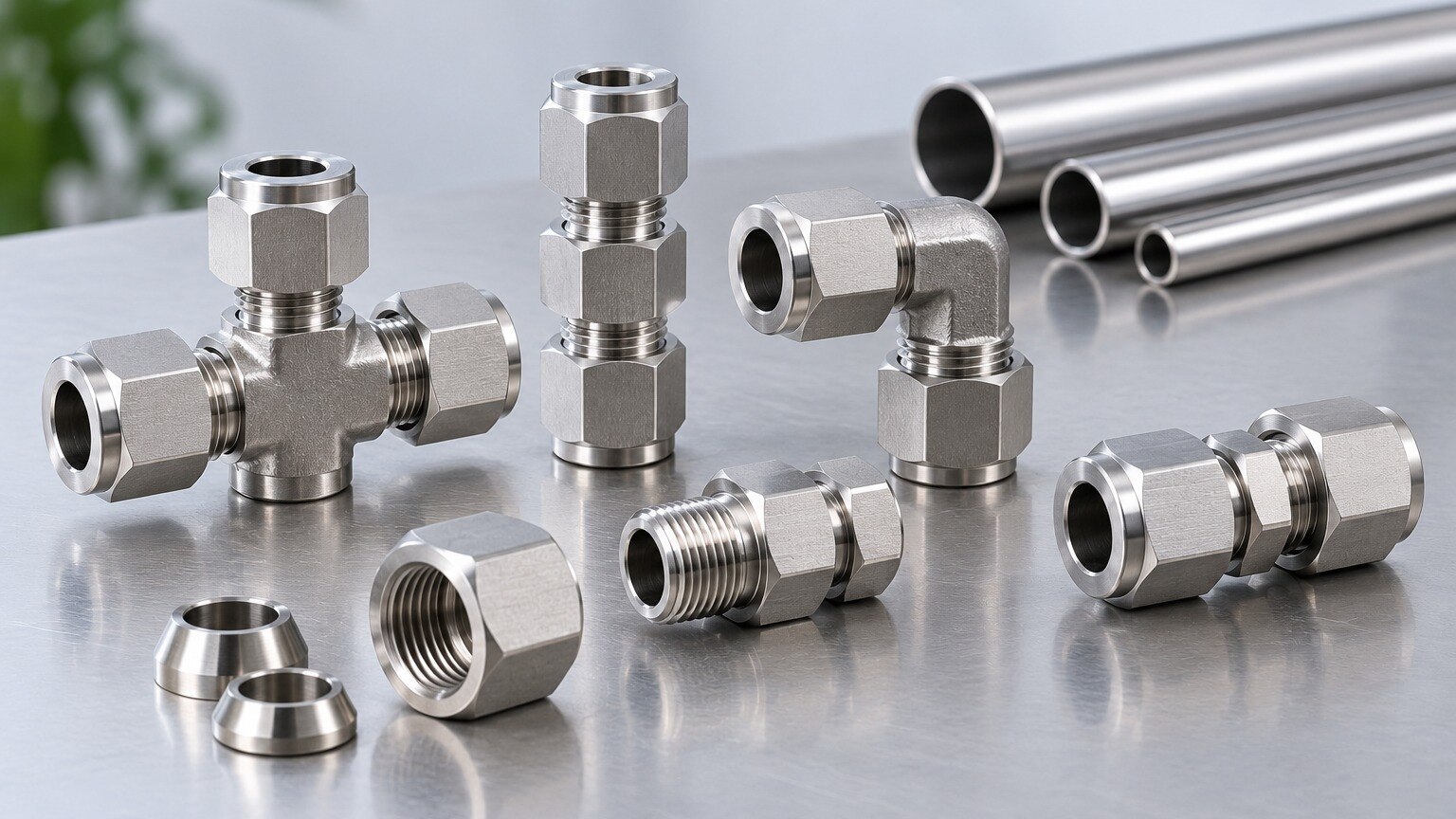
A ferrule joint can leak even when the tube size and fitting thread look correct. You will learn how to identify a compatible assembly, prepare and insert the tube, complete the specified make-up, inspect the joint, and select components for Chennai service conditions.
Key takeaways
- Use the tube, body, ferrule, nut, and sealing surfaces in every assembly.
- Cut tubing square, deburr both edges, and clean the tube before assembly.
- Follow the manufacturer’s turn-after-finger-tight procedure for single or double ferrules.
- Verify material grade, tube size, pressure rating, and inspection documents before buying.
What belongs in a ferrule fitting assembly before installation?
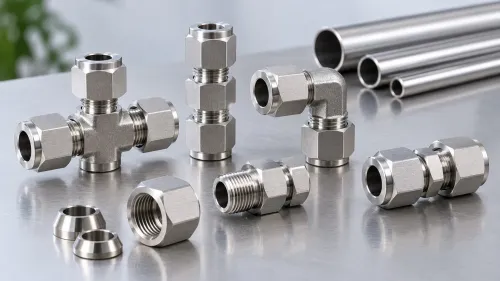
Before installation, a ferrule fitting assembly must contain the tube, fitting body, ferrule or ferrules, nut, and the metal-to-metal sealing mechanism formed when the nut drives the ferrule onto the tube and fitting body. Ferrule fittings for process piping are compression tube fittings, not ordinary threaded pipe joints.
Confirm these items before work begins:
- Match the fitting to the tube’s measured outside diameter, wall thickness, material and hardness. A 12 mm tube OD is not interchangeable with ½-inch nominal pipe; tapered or parallel pipe-thread fittings follow thread size, not tube measurement.
- Confirm the fitting-body material, thread standard, pressure-temperature rating and connection type. Check the manufacturer’s tube-selection and pressure tables for stainless-steel, instrumentation or hydraulic tubing, utility air, chemical service, and food or pharmaceutical lines.
- Select against the process medium, vibration, cleanliness requirement, chloride exposure, surface finish, elastomer compatibility and support loads. Stainless steel alone does not prove suitability: chlorides can attack the wrong alloy, and an incompatible elastomer can swell or leak.
- Check the complete design, including thermal movement, tube supports and attached valve weight. A fitting that matches the tube can still fail when unsupported tubing or a heavy valve loads the joint.
If you are deciding how are ferrule fittings installed in Chennai, begin with this specification check rather than nominal size. It prevents a correctly tightened fitting from becoming the wrong connection.
How do you prepare the tube and fitting for a ferrule joint?
Prepare the tube and fitting before any nut tightening: a square, clean tube end is essential to a reliable ferrule fitting assembly. Cut the tube with a tube cutter or fine-tooth hacksaw, keeping the cut perpendicular to the tube axis.
1. Inspect the cut end. Remove internal and external burrs with a deburring tool, then remove chips, oil and dirt from the tube and fitting using lint-free cleaning materials. Do not leave abrasive particles inside the fitting.
2. Reject or recut tubing with an angled hacksaw cut, heavy external scoring, or an oval cross-section. A scratched sealing area can stop the ferrule seating correctly and create a leak path.
3. Gather the required tools: deburring tool, correctly sized spanners, cleaning materials, tube supports, and a calibrated torque tool when the manufacturer specifies torque.
4. Mark the manufacturer’s required insertion depth on the tube. This mark gives you a visible check that the tube has not moved during assembly.
5. Push the tube fully into the fitting body until it contacts the internal shoulder or bottom. Hold it firmly in that position while starting the nut by hand; partial insertion can produce a false grip and poor resistance to vibration.
These ferrule fitting installation steps prepare the joint for the specified nut turns or torque. Do not tighten a contaminated, damaged, or unsupported tube and expect the ferrule to correct the defect.
How are single-ferrule and double-ferrule fittings made up?
A single-ferrule fitting uses one ring; a double-ferrule fitting uses separate front and back ferrules. Their gripping and sealing actions are not interchangeable.
| Option | Single-ferrule | Double-ferrule |
|---|---|---|
| Component arrangement | Nut, body and one deforming or cutting ring | Nut, body, front ferrule and back ferrule |
| Tube grip | One ring both grips and seals | Back ferrule grips; front ferrule makes the primary seal |
| Sealing action | Ring deforms or cuts according to maker’s geometry | Front ferrule seals against the body and tube |
| Installation | Finger-tighten, then use the maker’s specified turns or torque | Finger-tighten, then use the maker’s specified turns or torque |
| Reusability | Follow the maker’s replacement and reassembly limits | Reassemble only as the maker instructs; replace damaged ferrules |
These ferrule fitting installation steps require the fitting body to remain stationary while you turn the nut. Push the tube fully against the body shoulder before starting the nut; tightening a partially inserted tube creates a false grip and weak vibration resistance.
- Tighten by specified nut rotation or calibrated torque, never by feel. A supplied gap gauge checks sufficient make-up after tightening; it does not replace square cutting, deburring, cleaning, full insertion or the prescribed procedure.
- For reassembly, mark the nut position, inspect the tube and ferrules, and return the nut to the maker’s stated position. Stop if you find galling, cracks or deformation.
- Do not mix bodies, nuts or ferrules between manufacturers; matching geometry controls pressure and leak performance.
- PTFE tape belongs on suitable tapered threaded joints, not on the ferrule sealing surface.
What changes when ferrule fittings are installed in Chennai process piping?
Humidity, chloride exposure and fabrication debris make Chennai site control part of joint quality. Keep stainless components capped and dry, separate them from carbon-steel grinding dust, and cover open tube ends throughout fabrication.
1. Select ferrule fittings for process piping against the service, not tube size alone. Chemical, food, pharmaceutical, utility-air, hydraulic and instrumentation lines require separate checks for alloy, cleanliness, surface finish, temperature, pressure and fluid compatibility.
2. Support the tube independently with correctly spaced pipe supports and tube clamps. Allow for thermal expansion, control vibration, and leave enough access for spanners. Never hang a heavy valve, actuator or unsupported tubing load from the fitting; it can bend the tube and open the seal.
3. The answer to how are ferrule fittings installed in Chennai is completed only after the joint is tested. Use the project-specified pressure and test medium, following the applicable procedure.
On gas or hazardous service, pressure decay alone can miss a small leak; use an approved leak-detection solution, helium testing, or another method named by the project specification.
4. Complete-joint verification requires a visual inspection. Check correct tube insertion, nut position, tube scoring or ovality, ferrule alignment and any sign of leakage.
5. Record the result against the line and joint identification. A clean-looking fitting does not prove a pressure boundary: confirm the test pressure, medium, duration and acceptance result before commissioning.
What should you verify when buying ferrule fittings in Chennai?
A quotation for “SS ferrule fitting” is not a usable specification. For ferrule fittings for process piping, make procurement an installation-control decision: match the fitting to the actual tube, fluid, pressure, temperature, vibration and cleanliness class.
1. Request the manufacturer’s name, exact tube outside diameter and wall-thickness range, alloy grade, and heat or lot traceability.
2. Obtain the pressure-temperature table, thread standard, connection type, and test or inspection records. Confirm whether the thread is NPT, BSPT, BSPP or another specified form; tube OD is not nominal pipe size.
3. Ask whether the fitting is a single-ferrule or double-ferrule system. A ferrule fitting supplier in Chennai should identify the matched body, ferrule and nut set and provide the maker’s correct make-up procedure, including specified turns, torque or gap-gauge checks.
4. Do not mix ferrules, nuts or bodies from different manufacturers. Similar dimensions do not prove compatible sealing geometry or preserve the original pressure and leak-performance rating.
Mercury Metalinks can serve as a starting contact for industrial-metal supply, but obtain the named documents and check compatibility against the process design before ordering.
Your purchase checklist:
- Tube sample or measured OD and wall thickness
- Service fluid and material-compatibility requirements
- Design pressure and temperature
- Vibration, supports and valve-loading conditions
- Required cleanliness class and surface-finish records
- Delivery date and heat, lot or batch traceability
Related product
 | FERRULE FITTINGS Mercury Metalinks Mercury Metalinks is a trusted supplier and stockist of premium-quality Ferrule Fittings, offering a comprehensive range of... View product → |
Frequently asked questions
What belongs in a ferrule fitting assembly before installation?
The assembly needs the tube, fitting body, ferrule or ferrules, nut, and the metal-to-metal sealing mechanism formed during make-up.
How do you prepare the tube and fitting for a ferrule joint?
Cut the tube square, remove internal and external burrs, clean the tube and fitting, then inspect the sealing surfaces for scratches or contamination.
How are single-ferrule and double-ferrule fittings made up?
Insert the tube fully into the fitting body, tighten the nut by hand, and use the manufacturer’s specified wrench turns. Double-ferrule fittings use separate front and back ferrules that grip and seal the tube.
What changes when ferrule fittings are installed in Chennai process piping?
Account for Chennai’s heat, humidity, coastal salt exposure, vibration, and site contamination by selecting compatible materials, protecting open tubing, and inspecting joints after installation.
What should you verify when buying ferrule fittings in Chennai?
Confirm tube outside diameter, fitting material and grade, pressure and temperature ratings, thread specification, ferrule compatibility, batch traceability, and inspection documents.