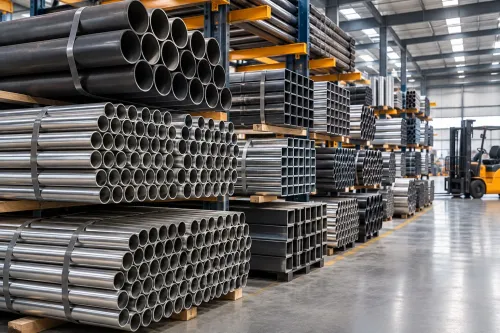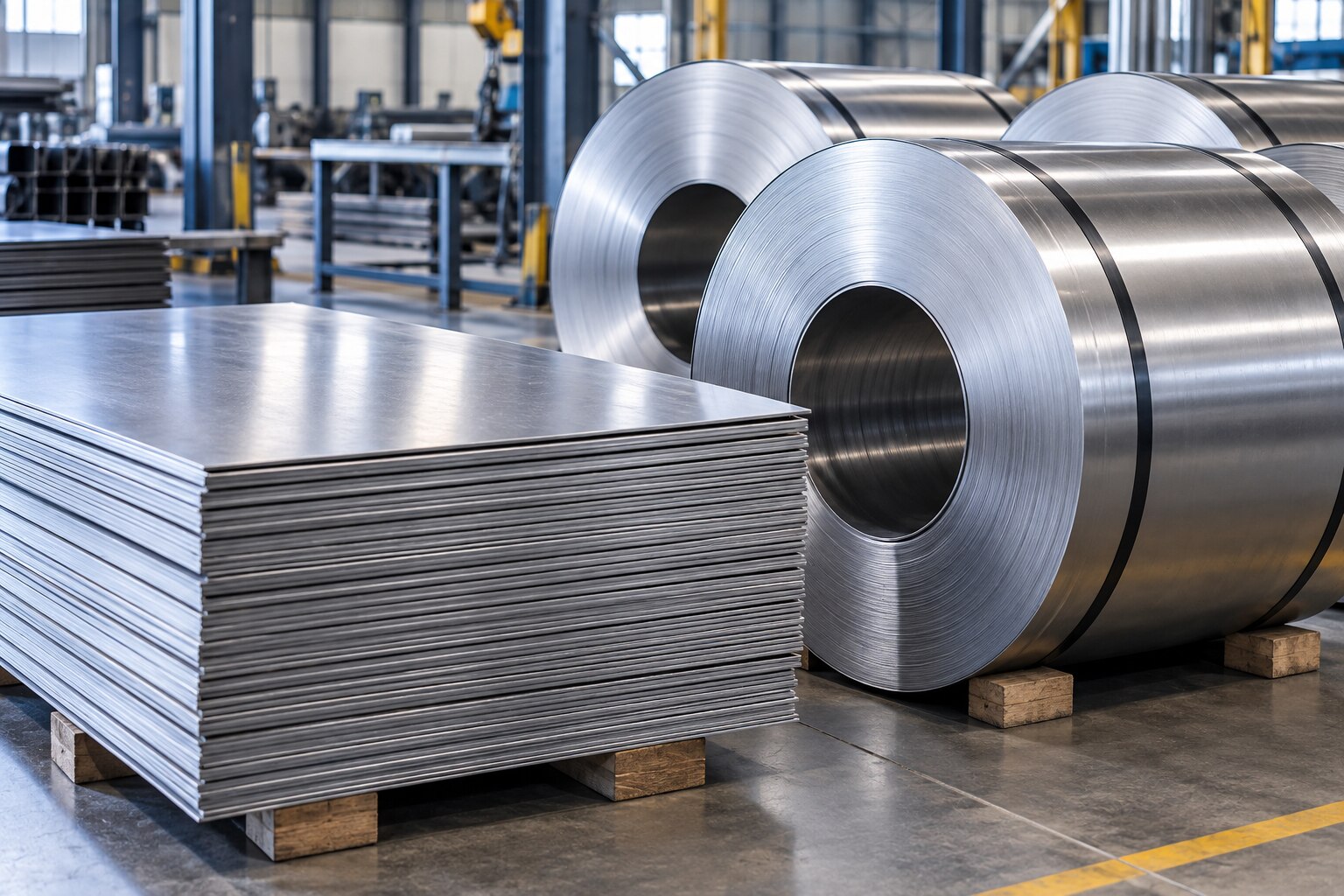
A plate or coil order can fail before production starts if the buyer gives only a material name and tonnage. By the end, you will know which dimensions, standards, processing steps, documents, costs and delivery controls to specify before approving a Hyderabad supply order.
Key takeaways
- State grade, thickness, width, length, finish, standard and quantity.
- Choose full coil, slit coil or cut sheet before requesting a quote.
- Compare material weight, usable yield and processing charges on one basis.
- Match test certificates, handling equipment and delivery capability to your order.
Start with the product form and a complete specification
An accurate quote starts with the product form: plate, full coil, slit coil, or cut-to-length sheet. “Mild-steel plate” or “stainless coil” is not enough. The industrial plate order process cannot begin reliably until the supplier has these plate and coil specifications:
1. State the governing standard and grade. For pressure-vessel material, name both ASTM A20/A20M and the grade specification, such as ASTM A516/A516M Grade 60 or 70. For stainless material, state the grade and product specification; ASTM A480/A480M alone is not a grade.
2. Give nominal thickness, ordered or guaranteed minimum thickness, width, and plate length or coil width. Name the tolerance standard and limits for thickness, width, length, flatness, and squareness.
3. For a coil, provide inner diameter, maximum outer diameter, maximum coil weight, edge condition, and whether you need a full, slit, or cut coil. Specify surface finish, such as 2B, BA, No. 4, or a hot-rolled finish; these are not interchangeable.
4. State quantity in pieces, tonnes, or kilograms, plus required bundle weight or piece count. Include the application, drawing or cut list, inspection level, test certificates, heat or batch-number traceability, marking, and packing requirements.
5. Give the Hyderabad delivery address, unloading equipment, access restrictions, and who handles unloading. Record crane or forklift capacity and vehicle requirements in the enquiry.
Finally, ask whether the quotation is from confirmed stock or mill-direct production, because minimum order quantities, dimensions, lead time, and dispatch dates differ.
How a Hyderabad plate order moves from enquiry to dispatch
After your enquiry, the supplier reviews the drawing and specification, checks available stock, and decides whether the order can ship from a Hyderabad yard or must be placed with a mill. The industrial plate order process is not complete until grade, heat number, dimensions, quantity, tolerances, finish and inspection documents are confirmed in writing.
- The quotation states the material standard, grade, thickness, width, length or coil width, quantity, processing charges, freight, GST, packing and delivery date.
- Stock confirmation identifies the actual heat, plate or coil numbers, available weight, dimensions and certificate status. A quoted grade is not proof of physical stock.
- If cutting, levelling, decoiling, slitting, edge trimming or blanking is required, the supplier confirms the finished dimensions, yield loss, processing tolerance and revised lead time.
- Before dispatch, inspection reconciles markings on each plate, coil or bundle with the mill test certificate. Check heat number, grade, dimensions, quantity, chemistry and tensile results; an unmarked or mixed bundle is not adequately identified.
- Dispatch planning records vehicle type, plate length, coil mass and orientation, bundle count or weight, load restraint, delivery point, access, unloading equipment and responsibility.
Stockist and mill-direct orders follow different routes:
| Route | What happens | Main check before commitment |
|---|---|---|
| Stockist | Material is selected from warehouse or yard stock | Confirm heat, dimensions, quantity and certificates |
| Mill-direct | Order enters a rolling schedule with minimums and fixed sizes | Confirm production slot, tolerances, lead time and documents |
The dispatch date is not the safe-receipt date. A plates and coils supplier in Hyderabad must align transport with your crane or forklift capacity and site access before releasing the load.
How coils are supplied as full coils, slit coils or cut sheets
1. Receive a full coil when your line can process the mill coil directly and your equipment accepts its width, mass, outside diameter and inside diameter. Confirm the winding direction, edge condition, permitted weld count and maximum coil weight before ordering; total tonnage and nominal width are not enough.
2. Request decoiling and cut-to-length processing when your fabricator needs flat sheets rather than a continuous coil. The supplier unwinds the coil, levels or straightens the strip, then cuts each sheet to the specified length. Confirm thickness and length tolerances, flatness, piece count and whether cut ends or blanking are required.
3. Request slitting when the parent coil is wider than your production line. A slitter divides it into narrower coils and may trim the edges, creating width loss, additional handling, processing charges and a separate lead time. State the slit width, number of coils, edge condition and maximum mass per resulting coil.
4. Treat unloading as part of the coil supply process in Hyderabad. State whether your plant has a crane, forklift, coil car or lifting attachment rated for the delivered mass and orientation, and record who unloads it. Include these details with the plate and coil specifications, alongside the delivery point and access limits.
Ask the supplier to show processing loss, tolerances, welds and charges separately. A quotation for a full coil is not comparable with a price for slit coils or cut sheets unless yield, freight and unloading are calculated on the same basis.
Compare weight, yield and processing charges on the same basis
Convert every offer to delivered cost per usable kilogram before choosing the lower rate. For a steel plate, theoretical weight is length (m) × width (m) × thickness (m) × 7,850 kg/m³. For stainless steel, use the density stated or agreed in the quotation.
| Basis | Convert it to | Check before comparing |
|---|---|---|
| Kilograms or tonnes | Divide total price by net material weight | Confirm whether billing uses theoretical weight or weighbridge weight |
| Pieces | Multiply piece count by calculated weight per plate or sheet | Check dimensions, thickness tolerance and declared piece or bundle weight |
| Running metres | Multiply length by width, thickness and density to calculate weight per metre | Confirm whether the rate includes decoiling, slitting, levelling or cutting |
| Coils | Use net coil weight after processing yield loss | Separate the coil price from slit, cut-to-length, packing, certificate and handling charges |
The industrial plate order process becomes misleading when one quote uses net weight and another uses gross weight including skids, wrapping or bands. Add GST, freight to your Hyderabad delivery point, inspection fees and certificate charges to both totals; record mill or warehouse quantity tolerance rather than treating an estimate as exact.
For the coil supply process in Hyderabad, calculate usable output after trimming and slitting scrap. A cheaper tonne rate can cost more if yield is lower. Record who owns the offcuts and whether unloading, crane capacity and vehicle suitability are included, because dispatch cost is not the same as safe receipt.
Match certificates, handling and delivery capability before choosing a supplier
Do not approve a plate or coil from its certificate alone. Match the mill test certificate to the physical bundle or coil before cutting: confirm heat number, grade, product form, dimensions, quantity, and the marking stamped or tagged on the material. Chemistry and tensile results cannot identify an unmarked or mixed bundle.
Ask a plates and coils supplier in Hyderabad to confirm these items in writing:
- Material standard and grade, including the governing thickness-tolerance standard
- Nominal thickness versus guaranteed minimum thickness, width, length or coil width
- Heat number, plate or coil identification, bundle piece count, and bundle or coil weight
- Surface finish, edge condition, inspection report, packing method, and dispatch date
- Vehicle type, load restraint, unloading responsibility, and required crane or forklift capacity
| Supplier route | Evidence to demand | Main delivery risk |
|---|---|---|
| Stockist-held material | Current stock location, heat numbers, dimensions, photographs, and matching certificate | Quoted grade exists, but the required heat or size is unavailable |
| Mill-direct order | Mill confirmation, rolling schedule, production minimum, fixed dimensions, and certificate timing | Longer lead time or unsuitable standard coil dimensions |
| Processed coil or plate | Cutting, slitting, levelling, blanking tolerances, width loss, and processing charges | Delivered form differs from the mill coil ordered |
Mercury Metalinks can be assessed by the same evidence: do not treat a quotation as confirmed stock until heat, quantity, dimensions, certificates, and Hyderabad unloading arrangements are recorded in the purchase order.
Related product
 | PLATES & COILS Mercury Metalinks Mercury Metalinks is a trusted supplier and stockist of premium-quality Plates & Coils, offering a comprehensive range of metal... View product → |
Frequently asked questions
What specifications are needed for a plate or coil enquiry?
Give the product form, material grade, governing standard, thickness, width, length or coil size, surface finish, edge condition, quantity, tolerance, testing requirements and delivery location.
How does an industrial plate order process work in Hyderabad?
The process runs from a complete enquiry to stock and specification confirmation, quotation, order approval, material allocation, inspection and documentation, packing, transport planning and dispatch.
How are coils supplied in Hyderabad?
You can receive a full coil, a slit coil with a specified width, or cut-to-length sheets. The right form depends on your equipment, required dimensions, handling limits and acceptable processing charges.
How should you compare plate and coil quotes?
Compare the same grade, thickness, width, tolerance and quantity basis, then separate material weight, usable yield, slitting or cutting charges, packing, freight and taxes.
What should you verify before choosing a plates and coils supplier in Hyderabad?
Check the material test certificate against the purchase specification, confirm heat or batch traceability, inspect packing and handling arrangements, and verify the supplier's ability to meet your delivery and cutting requirements.